
How to Tell When a Flower Seed Head Is Ready to Collect
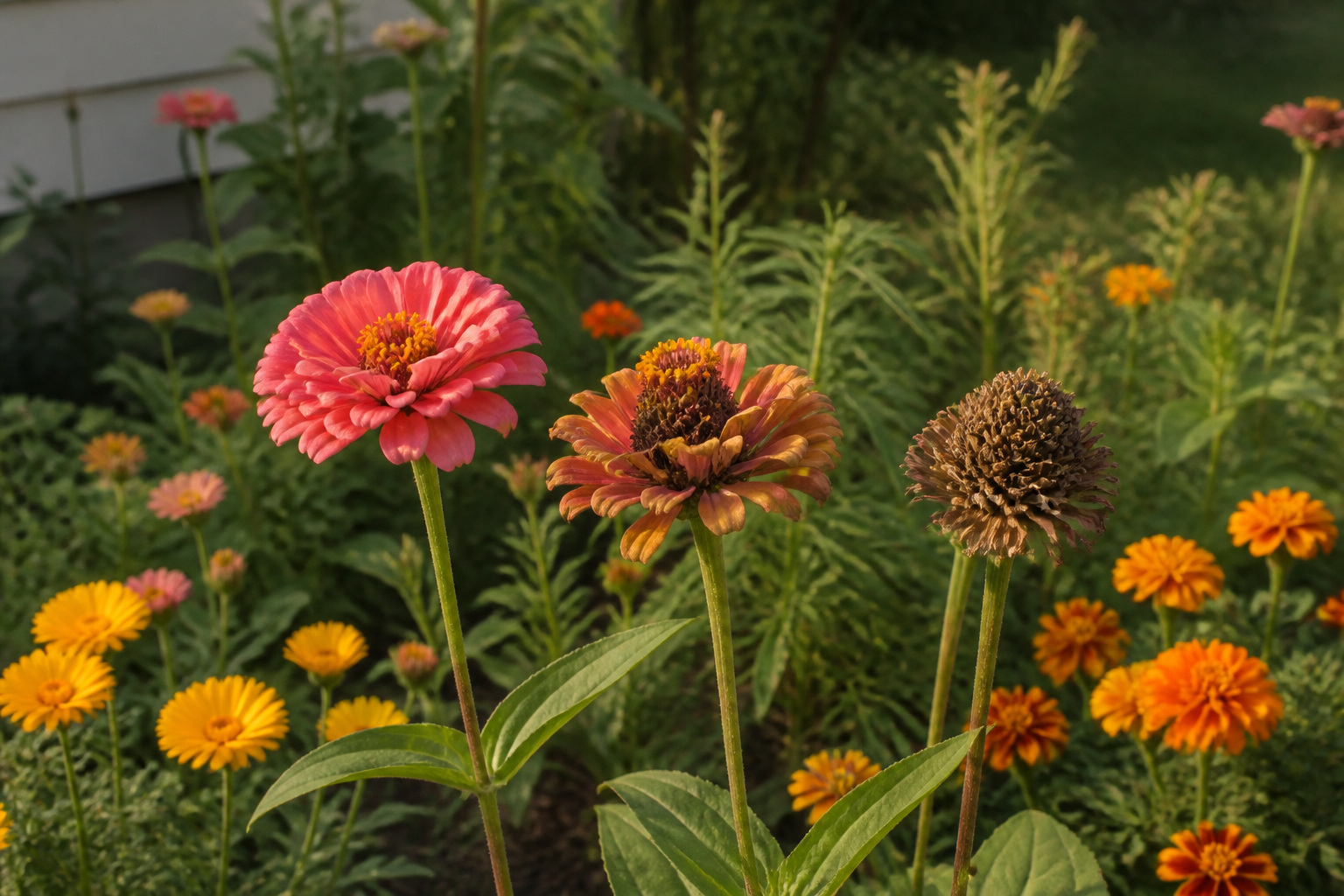
A flower can look finished long before its seed is ready.
The petals fade. The color leaves. The head begins to droop. It is tempting to cut it, open it, and look for next spring inside.
But a faded bloom and a mature seed head are two different stages.
For many dry-seeded flowers, the useful collection window comes later: after the seed has finished developing, but before the head shatters, a pod opens, rain damages the material, or birds carry the seed away.
You do not need to collect every faded flower. You do need enough evidence to give each one a clear next action:
- collect it now;
- wait and recheck;
- leave it for wildlife or welcome self-sowing; or
- stop until you can identify the plant or find species-specific guidance.
This article will help you make that decision for one identified, garden-grown flower.
Start With One Flower You Can Identify
Before judging the seed head, name the plant.
Use the original packet, plant tag, garden record, or a dependable identification source. The common name alone may not be enough. “Marigold,” for example, can refer to plants in different genera, while the familiar annual garden marigolds are generally species or hybrids within Tagetes.
Identification matters because flowers hold seed in different structures:
- a compact head;
- a central seed cluster;
- a pod or capsule;
- a cone-like center; or
- another species-specific structure.
Those structures mature and release seed differently. One brown-and-dry rule cannot describe all of them.
Also confirm that the plant is garden-grown or that you have permission to collect it. Native and perennial seed may have special propagation needs, and public or wild collection can raise legal, ethical, and ecological questions. Keep this first check simple: if you cannot confidently identify the plant and its seed structure, stop before cutting.
A Faded Bloom Is the Beginning of the Check
Petal drop tells you that flowering is ending. It does not prove that the seed inside is mature.
After pollination, the plant still needs time to develop the seed. A head may look untidy while its base remains green and flexible. A pod may be full-sized but still soft. The seed may be visible but pale, thin, or firmly attached.
That is usually a wait signal for dry-seeded flowers.
Seed collected before it is mature does not reliably continue developing once it is cut from the plant. The safer approach is to leave the structure attached until the species-appropriate maturity cues are present, unless verified guidance for that flower says otherwise.
Think of fading as the moment to begin watching—not the moment to assume the seed is ready.
Check 1: Is the Head, Pod, Stem, or Base Dry Enough?
Look at the whole seed-bearing structure, not only the old petals.
For many beginner-friendly annual flowers, useful signs include:
- the head, pod, stem, or flower-head base has turned brown or tan;
- the structure feels dry, papery, crisp, or brittle rather than green and flexible;
- the petals have dropped or dried completely; and
- the structure no longer looks as if it is actively filling or enlarging.
Use those signs as evidence, not proof by themselves.
A brown outer surface can surround underdeveloped seed. Wet weather can darken or damage plant material. Disease can also make a structure look brown without making the seed inside suitable to save.
If the base is still green, the stem bends like fresh plant tissue, or the pod feels moist and pliable, wait. Recheck after more development and a stretch of dry weather rather than assigning one universal number of days.
Check 2: Does the Seed Look and Behave Mature?
Now inspect a small sample without dismantling every head.
Depending on the species, mature dry seed may:
- reach an expected dark, grey, tan, brown, or otherwise mature color;
- feel firm or filled rather than soft, flat, or watery;
- separate with gentle rubbing;
- rattle or move inside a dry pod; or
- release when a mature head is lightly shaken over a clean surface.
Color is species-specific. A dark seed is not automatically mature, and a pale seed is not automatically immature. The useful comparison is with dependable guidance or a clearly mature example for that exact flower.
Do not crush or pull apart every structure just to investigate. Test one head or pod carefully. If the seed is still soft, very pale for the species, or firmly embedded in flexible tissue, record what you saw and wait.
Check 3: Will Waiting Help—or Will It Lose the Seed?
Once maturity is close, the decision changes.
Some flowers hold dry seed securely. Others scatter it quickly through open pods, wind-borne structures, or heads that release seed when touched. Birds may begin feeding as soon as a sunflower or another favored seed head matures. Autumn rain can also make an already mature head harder to dry and clean.
Ask:
- Is the seed mature now, or does it still need time on the plant?
- Is the pod beginning to open?
- Does the head shed seed when gently moved?
- Are birds already feeding from it?
- Is extended wet weather likely before the next check?
Do not collect immature seed merely because rain is coming. But when the species-specific maturity evidence is clear, prepare to collect before the seed disappears.
This is the narrow window you are looking for: dry enough to be mature, early enough to keep.
What Readiness Can Look Like in Familiar Flowers
These examples are starting points. Confirm the exact species or variety when the decision is uncertain.
Zinnia and annual Tagetes marigold
Allow the spent flower head to become fully brown and dry on the plant. The head should feel crisp rather than green or flexible. Open one mature head over paper and confirm that the seed has developed its expected firm shape before collecting the rest.
Calendula
After pollination, the petals fall and the curved seed structures become more visible. They move from green toward grey, tan, or light brown as they mature. Collect only after the seed is fully mature and dry; do not use one seed color as a rule for every flower.
Sunflower
Petal dieback begins the observation period. Let the head continue drying on the stalk according to species-specific guidance. If birds are feeding, a breathable paper covering may help protect the mature head without trapping moisture.
Pod- or capsule-forming flowers
The pod may need to become brown, dry, or leathery and may begin to rattle or approach opening. Some species release seed abruptly. Identify the plant and learn its mature pod behavior before waiting for every pod to split.
Choose One Action
After checking the structure, the seed, and the risk of loss, give the flower one next step.
Collect now
Choose this when:
- the flower is identified;
- the head, pod, stem, or base shows species-appropriate dryness;
- the seed has reached its expected mature condition;
- the seed releases in the expected way; and
- the surface moisture or dew has dried.
Wait and recheck
Choose this when:
- the base or stem remains green and flexible;
- the seed is soft, pale, flat, or firmly attached for that species;
- petals have only recently faded;
- the structure still appears to be developing; or
- your evidence is incomplete.
Write down what you are waiting to see. “Recheck when the head base is brown and the seed releases with gentle rubbing” is more useful than “check again later.”
Leave it
You do not need every mature seed head.
Leave some when you want to support birds, retain winter interest, or allow welcome self-sowing—and when the plant is appropriate for that location. A plant that spreads aggressively, has an unknown identity, or shows a disease concern may need a different decision.
Stop for guidance
Pause when you are uncertain about:
- plant identity;
- disease or mold;
- toxicity or intended use;
- invasive or aggressive spread;
- collection permission; or
- perennial or native-seed dormancy and sowing needs.
Saved flower seed in this article is planting seed, not food.
Prepare the Bag Before You Cut
Once the decision is “collect,” set up the next task before removing the head.
Bring:
- a clean paper bag or envelope;
- a pencil or permanent marker;
- clean sharp snips when the structure should be cut; and
- a shallow paper-lined tray or screen for finishing indoors.
Label the breathable container before the first cut with the flower name, collection date, and garden location. Hold the bag beneath a pod or head that may release seed as it moves. Keep different flowers and varieties separate.
Collect after dew or surface moisture has dried. Do not seal damp heads, pods, or loose seed in plastic.
The next task is not long-term storage. It is finishing the seed and surrounding plant material thoroughly dry in a clean, ventilated place out of direct sun. Prepare that space now so a careful collection does not become a damp, unlabeled pile on the counter.
Your Flower Seed-Head Decision
For one identified garden-grown flower:
- Treat fading as the start of observation, not proof of maturity.
- Check the head, pod, stem, or base for species-appropriate dryness.
- Check the seed's expected color, firmness, and release behavior.
- Decide whether more time will mature the seed or increase the risk of loss.
- Choose collect, wait, leave, or stop.
- Label a breathable container before cutting.
- Prepare a dry, ventilated finishing surface for the next task.
The bloom may be finished, but the plant may still be making next year's possibility. Give it enough time to finish—and know what you will do before that possibility falls, flies, or gets eaten.
Backyard Grow Co. is developing Save the Bloom, a complete flower-seed collection, drying, labeling, storage, and spring-planning guide. No release date is currently promised.
Stay one step ahead in your garden. Get timely reminders and checklists before the next seasonal task is due—including when collected flower seed needs to finish drying and be prepared for storage.
Get reminders before the next task is due
Sources Reviewed
- Illinois Extension — Cherish favorite flowers and challenge your green thumb with seed-saving
- Penn State Extension — Seed Saving Basics
- Penn State Extension — Winter Thoughts: Seed Saving
- UF/IFAS Extension — Seed Saving
- Utah State University Extension — Creating Sustainable School and Home Gardens: Creative Ways to Store Seeds
- University of Arkansas Cooperative Extension — Marigold
- Wisconsin Horticulture Extension — Calendula, Calendula officinalis
- University of Maryland Extension — Collecting & Sowing Native Plant Seed
- Penn State Extension — Nurturing Nature: Fall Cleanup Strategies