
Row Cover, Frost Cloth, or Plastic? Choose the Right Protection Before a Cold Night
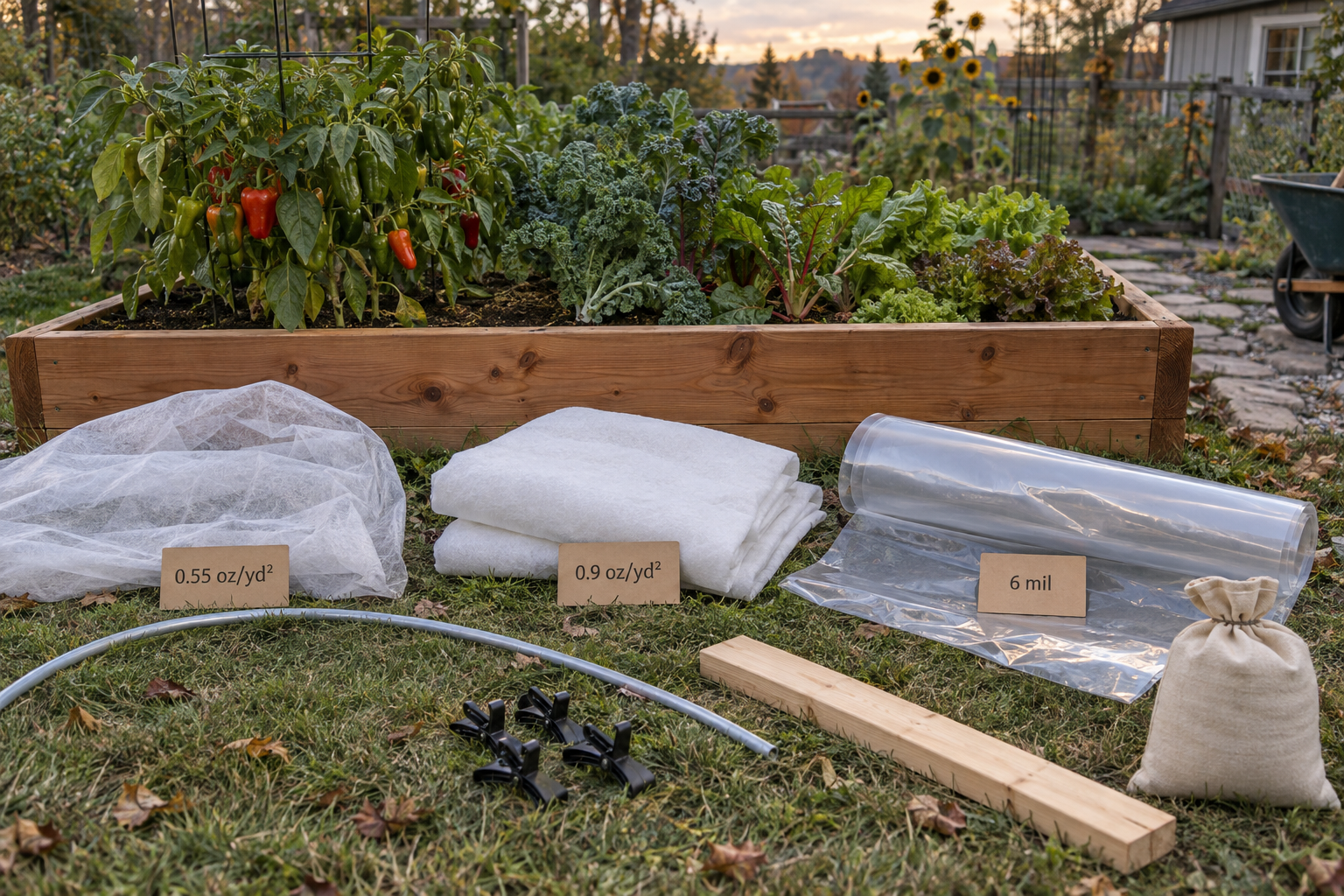
Illustrative image; not a BGC field test. Verify the actual material label and instructions.
The first question is not which cover to buy. It is what you are trying to protect.
A nearly mature pepper crop may justify one carefully planned night under cover. A bed of established kale may need a different decision. A few tiny fruits that are unlikely to finish in the remaining season may not justify a cover at all.
If you have not yet decided which crops are worth protecting, start with the crop-by-crop first-frost plan. Once a crop has a clear reason for protection, use four checks:
Crop: What exact harvest or plant stage are you protecting?
Forecast: What kind of cold event, wind, moisture, and next-day weather are expected?
Material: What is the cover made from, how heavy or thick is it, how much light does it transmit, and what does its documentation actually say?
Setup: Can it fit over the crop, reach the ground, stay anchored, avoid damaging contact, and be removed or vented on time?
The right answer may be breathable fabric, a supported plastic low tunnel, or no cover. A product label alone cannot make that decision for your garden.
Row Cover and Frost Cloth Are Not Always Different Things
Garden stores use several overlapping names: floating row cover, garden fabric, frost cloth, frost blanket, and plant cover.
“Row cover” is the broadest term. It describes material placed over a crop or row for purposes such as frost protection, wind protection, pest exclusion, or season extension. University Extension guidance includes both fabric and plastic within that broad category.
“Frost cloth” or “frost blanket” usually refers to breathable spunbonded fabric—often polypropylene or polyester—sold for cold protection. In other words, many frost cloths are row covers. They are not automatically a separate material category.
That overlap matters when you shop. One thin white fabric may be designed mainly to exclude insects. Another may be a medium-weight season-extension cover. A third may be a heavy overwintering blanket. The words on the front of the package are less useful than the specifications:
material composition;
weight in ounces per square yard;
light transmission;
documented frost or cold claim;
width and length;
whether water and air pass through;
whether supports are recommended; and
the removal, ventilation, and care instructions.
The Practical Difference: Breathable Fabric Versus Plastic
For a one-night garden decision, the most important material split is usually breathable fabric versus nonporous plastic.
Breathable spunbonded fabric
Fabric row cover allows some air, light, and water to pass. It can be draped loosely over certain low crops as a “floating” cover or held above plants with hoops.
Lightweight fabric usually transmits more light and is easier for plants to lift as they grow, but it provides a smaller cold margin. Heavier fabric generally holds more heat and blocks more light. University of Maryland Extension groups common row-cover fabrics roughly this way:
lightweight, about 0.45 oz/yd²;
medium weight, about 0.5–1.0 oz/yd²; and
heavyweight, about 1.5–2.2 oz/yd².
Those ranges help you read a label. They are not a universal temperature calculator.
Fabric can still cause problems. Wind may rub it against leaves or growing points. Rain and condensation can make it heavier. Frost injury may be worse where a cover touches foliage. Medium and heavy materials can press on stems and reduce light more than a thin cover.
Use hoops when the crop is tall, brittle, top-heavy, or likely to be damaged by contact. Supports also help keep wet fabric from settling onto the crop.
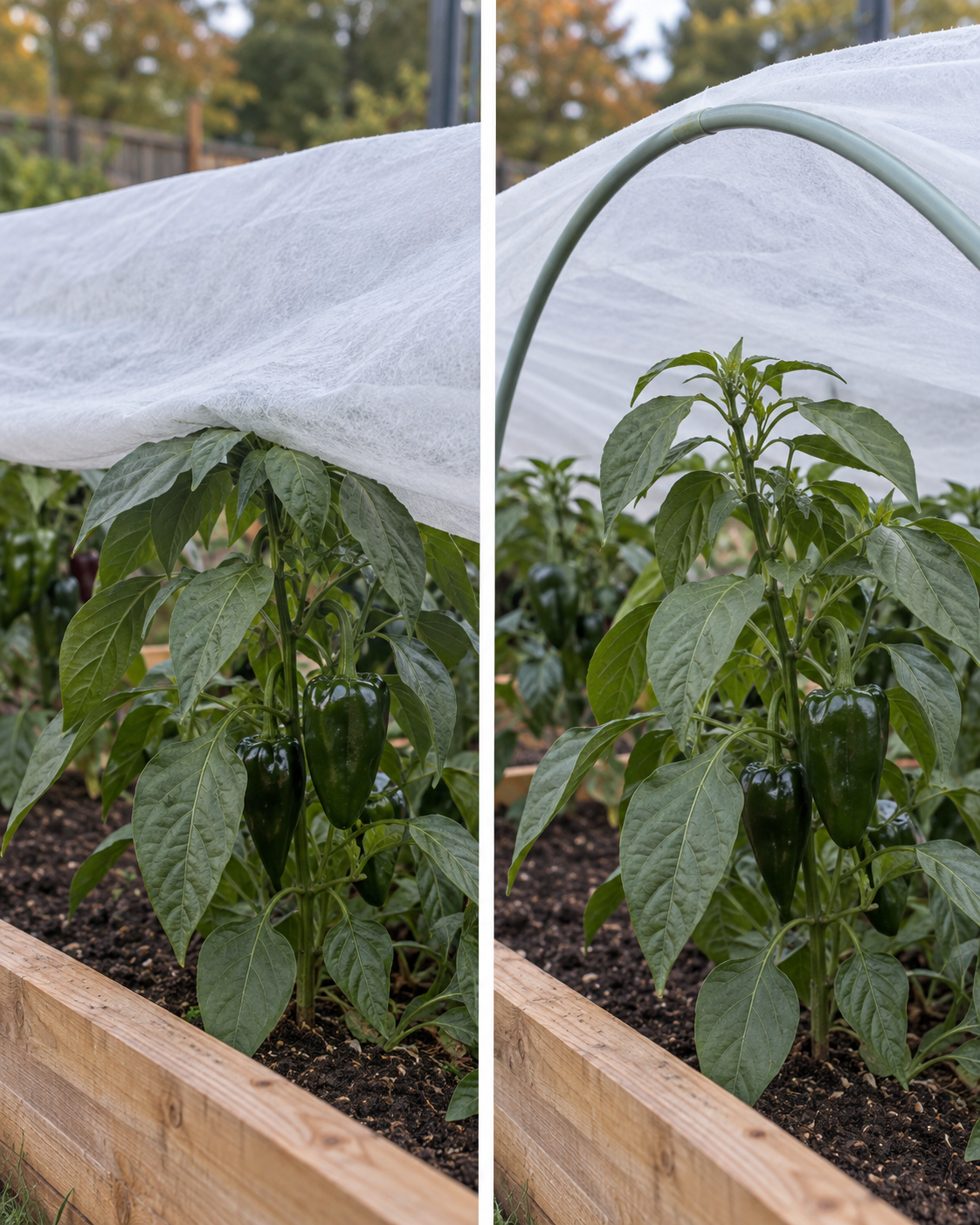
Illustrative image; not a BGC field test. Fabric contact is a setup consideration, not proof of damage.
Clear plastic film
Clear polyethylene film is not breathable. It sheds rain and traps heat more aggressively, which can make it useful as a managed low-tunnel cover. It also creates the clearest risk of overheating after sunrise.
Utah State University Extension reports that plastic low tunnels can become 25–30°F warmer than outdoor air on warm sunny days. That is not a reason to expect a matching nighttime benefit. It is a warning that a sealed plastic tunnel needs active temperature monitoring and ventilation.
Plastic should be held above the foliage. Extension guidance warns that leaves touching plastic during freezing conditions can be injured. Use hoops or another suitable frame, secure the film against wind, and decide exactly when the sides will be opened or the cover removed.
If you are buying film for repeated outdoor use, look for greenhouse-grade, UV-resistant polyethylene rather than assuming that construction sheeting or an unlabeled household plastic sheet has the same durability or instructions.
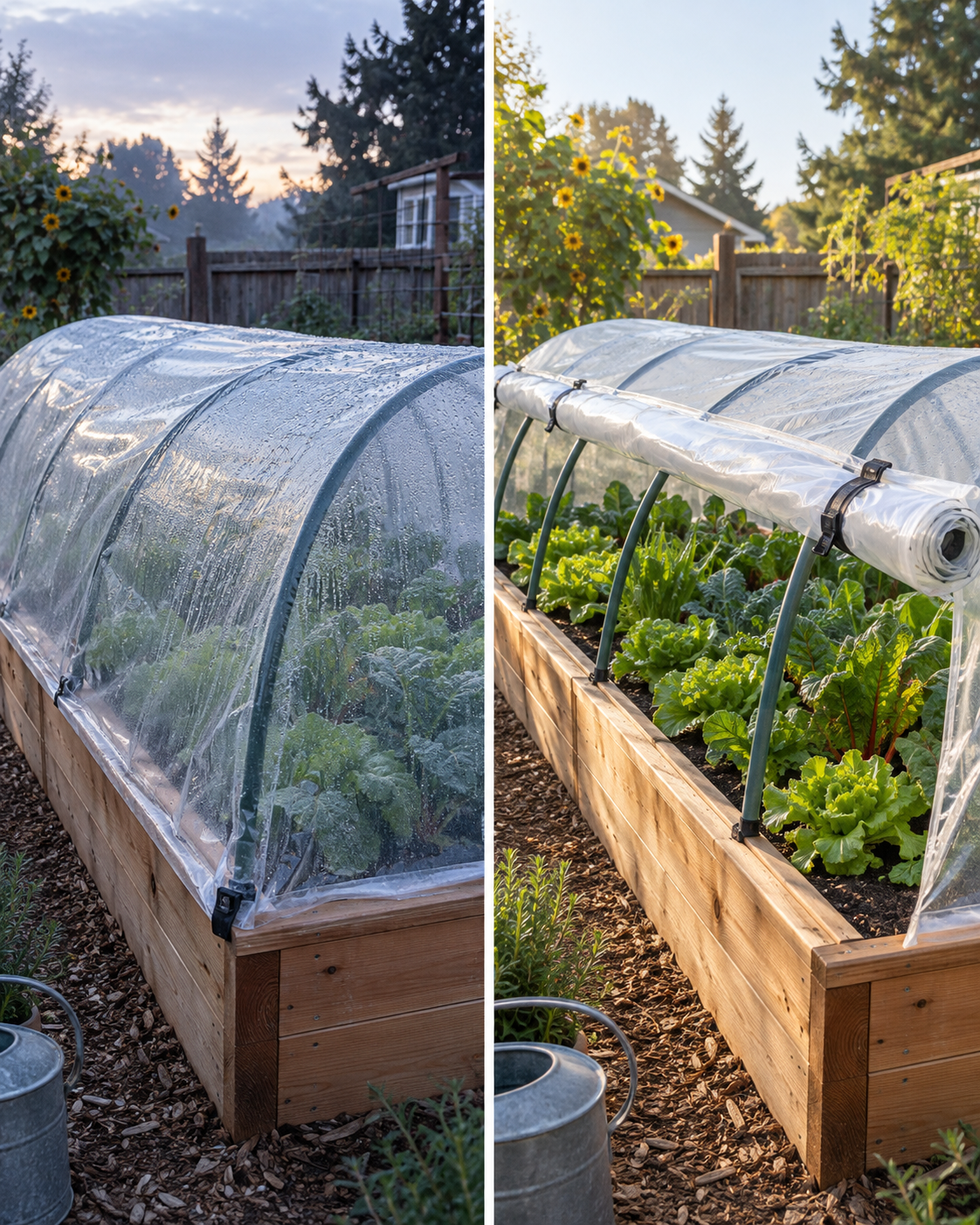
Illustrative image; not a BGC field test or measured temperature result.
A Quick Comparison
Air and water movement
Breathable fabric row cover or frost cloth: Some air and water pass through
Clear plastic film: Nonporous; blocks rain and needs active air exchange
Typical support
Breathable fabric row cover or frost cloth: May float over suitable low crops; hoops recommended for upright crops and heavier fabric
Clear plastic film: Support away from foliage
Daytime handling
Breathable fabric row cover or frost cloth: More forgiving, but heavy fabric and warm sun still require checking
Clear plastic film: Clear ventilation or removal plan required
Contact risk
Breathable fabric row cover or frost cloth: Rubbing, wet weight, and localized frost injury can occur
Clear plastic film: Direct contact during freezing conditions can injure foliage
Wind risk
Breathable fabric row cover or frost cloth: Can lift, tear, or abrade plants
Clear plastic film: Can lift, tear, or stress the frame
What to read on the label
Breathable fabric row cover or frost cloth: Weight, light transmission, stated use, size, support and care instructions
Clear plastic film: Film type, thickness, UV rating, light transmission, size, frame and ventilation instructions
Best beginner use
Breathable fabric row cover or frost cloth: A correctly weighted, well-fitted one-event cover when the documentation fits the forecast
Clear plastic film: A deliberately built and managed low tunnel—not a last-minute sheet over leaves
Do Not Turn a Rating Into a Guarantee
Current product pages use different rating formats. Johnny's AG-19 page states “2–4° frost protection,” while its AG-30 page states “frost protection down to 26°F/-3°C.” Gardener's Supply lists GardenQuilt protection “down to 24°F.” Separately, University of Maryland Extension describes a general medium-weight 0.5–1.0 oz/yd² grade as giving 4–6°F of frost protection and a heavyweight 1.5–2.2 oz/yd² grade as giving up to 8°F.
Those manufacturer or retailer product-page statements and Extension weight-band ranges are different evidence types. Each can help with comparison, but none tells you the temperature that every leaf in your bed will experience.
Actual performance changes with:
the amount of heat stored in the soil before sunset;
how completely the cover reaches the ground;
open gaps at sides and ends;
material weight and layering;
cold duration, wind, and cloud cover;
rain, dew, and wet fabric;
plant height and points of contact;
the bed's exposure or low-lying position; and
the crop, cultivar, stage, and recent acclimation.
Do not subtract a product's degree claim from the forecast low and treat the result as a safe crop temperature. Treat the rating as one input. Your setup and the actual event determine whether the cover delivers that margin in your bed.
When the forecast is more severe than the material's documented use—or the crop has no realistic remaining harvest—harvesting, moving a container, or accepting the end of the crop may be the better decision.
Use the Crop / Forecast / Material / Setup Check
1. Crop: Name the job before the product
Write down the exact crop, what is ready now, what is still developing, and what one more protected night could realistically change.
Then look at the plant's physical shape. A low bed of spinach presents a different setup than a chest-high pepper plant. A tender growing point, a loaded branch, or a trellis can make direct contact or wind rub more damaging.
If you cannot name the harvest or plant value the cover is protecting, stop before buying another material.
2. Forecast: Read the whole event
The predicted low is only one part of the setup. Also check:
how long the cold is expected to last;
whether a Frost Advisory, Freeze Watch, or Freeze Warning is active;
wind speed and direction;
rain, snow, or heavy dew;
whether the exact bed is exposed, sheltered, or low-lying; and
the temperature and sun expected after sunrise.
Wind may lift an edge, carry off a loose cover, tear fabric, or cause repeated contact with leaves. Moisture may add weight. A bright morning can heat a plastic tunnel quickly.
The plan for the next day belongs in the setup before the cover goes on.
3. Material: Read the back of the package
Ignore the marketing name for a moment. Find these fields:
Composition: spunbonded polypropylene or polyester, polyethylene film, insect mesh, woven textile, or something else.
Weight or thickness: ounces per square yard for fabric; mil thickness for plastic.
Light transmission: especially important if the cover will remain on for more than one night.
Cold claim: record it as the manufacturer's claim, not your guaranteed result.
Dimensions: confirm the actual width and length.
Instructions: support, anchoring, contact, cleaning, reuse, and daytime handling.
A lightweight insect barrier is not automatically a frost blanket. A heavy fabric is not automatically best if it will shade, press on, or overheat the crop. Clear plastic is not automatically better because it traps more heat.
4. Setup: Measure the path, not only the bed
A 4-foot-wide raised bed does not need only 4 feet of cover. The material must travel from the ground on one side, over the highest hoop or plant, and back to the ground on the other side. It also needs enough excess to close and anchor both ends.
Install or mock up the supports, then run a rope over them from ground to ground. Measure that rope. Add the material your anchoring method needs on both sides. Measure the bed length and add the end-closure allowance.
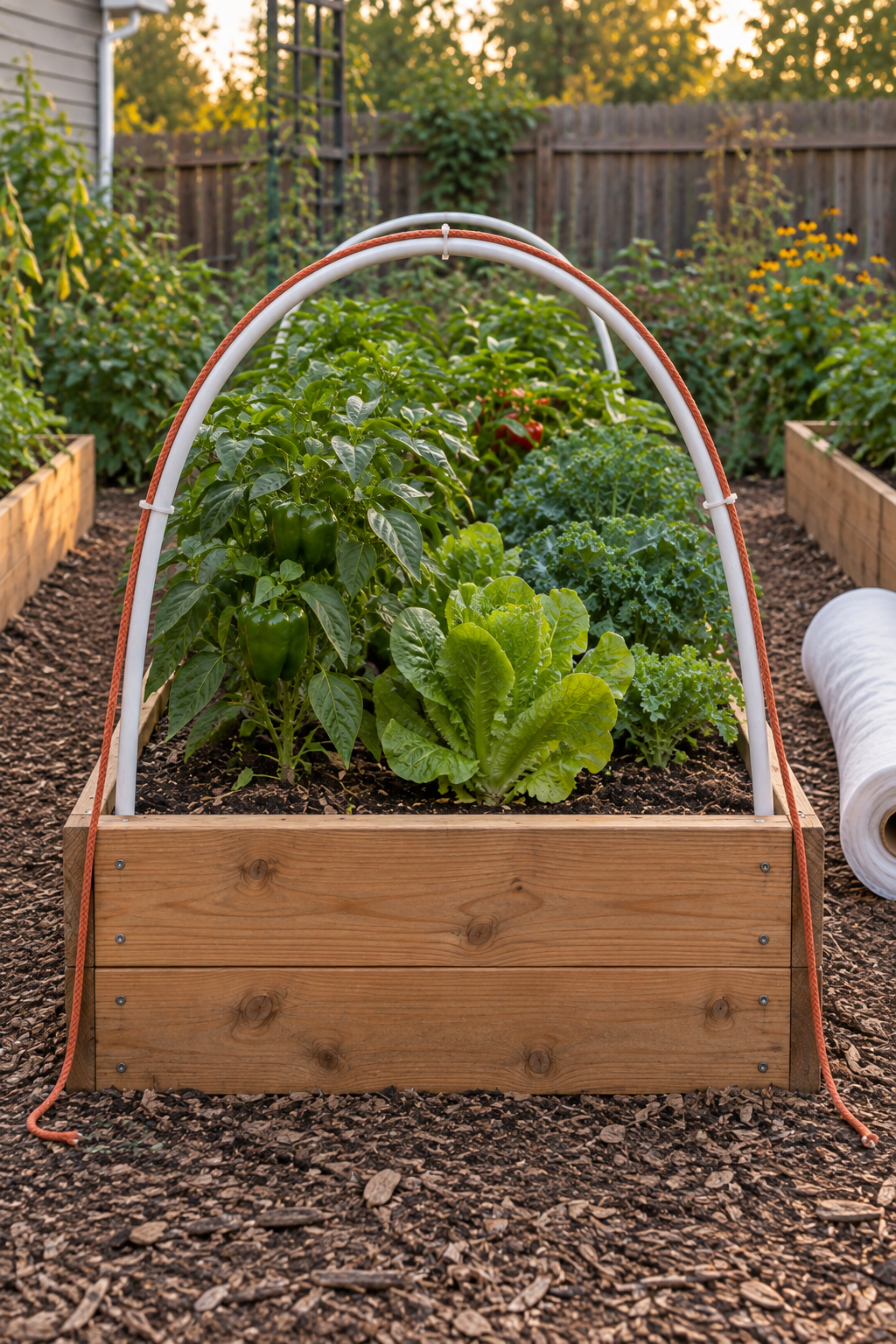
Illustrative image; not a universal measurement. Measure the installed structure and add the allowance required by the chosen anchoring method.
Use boards, sandbags, soil, pins, rocks, or another appropriate method to hold the edges. Avoid sharp points that can tear the cover, and do not rely on a few light objects when wind is expected. The goal is not only to keep the cover nearby. It is to keep it closed at ground level and stable around the crop.
Worked Example: A 4 × 8-Foot Pepper Bed
A gardener has several nearly mature peppers that may benefit from one more week. The forecast calls for a brief cold night, light wind, no rain, and sun the next morning.
Crop: The remaining harvest is specific. The plants are upright, with growing points and fruiting branches that should not carry the cover.
Forecast: The event may fit the intended use of a documented frost cover, but the sunny morning creates a daytime management requirement.
Material: The gardener compares a medium-weight breathable fabric with a clear plastic film. The fabric is simpler for one event and permits some air and water movement. Plastic would require a supported, tightly managed tunnel and active morning ventilation. The fabric is selected, subject to its actual label instructions and the final forecast.
Setup: With hoops installed, a rope measures 8.5 feet from ground to ground. The planned anchors need about 1 foot of fabric on each side, so the working width is 10.5 feet. A 10-foot roll is too narrow for that planned allowance; a 12-foot width fits. The 8-foot bed also needs about 2 feet at each end for closure, for a working length of roughly 12 feet.
Before evening, the gardener sets the hoops, stages anchors, checks that the fabric does not pull against the peppers, and writes down the morning removal time. After the plants thaw, the gardener checks the crop and records where the fabric stayed secure or touched foliage.
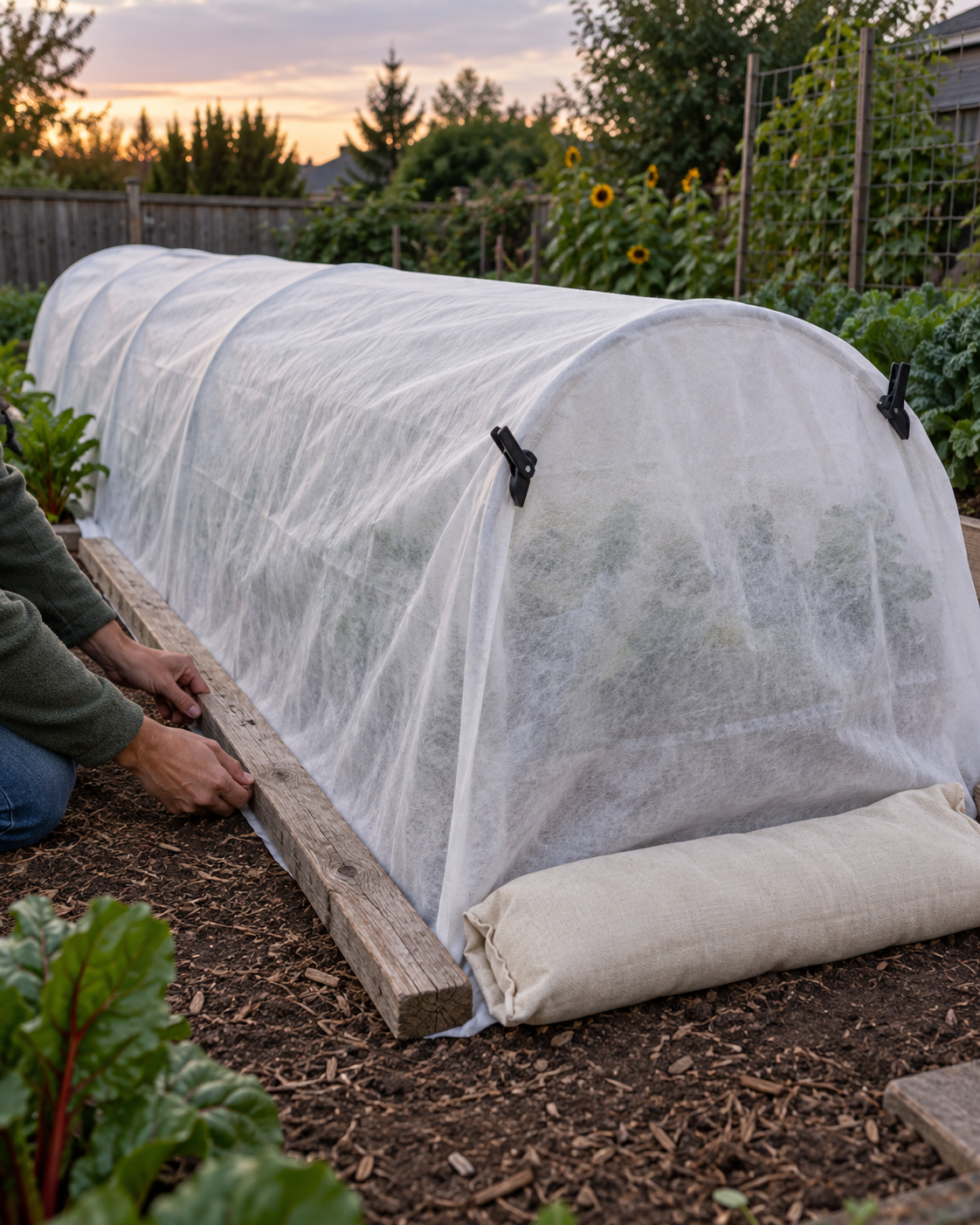
Illustrative image; not a BGC field test or performance claim.
The measurements are specific to this setup. A different hoop height, bed wall, crop, anchor, or material changes the answer.
Before the Cover Goes On
Use this final check:
The crop has a specific remaining purpose.
The latest forecast still fits the decision.
The material's composition, weight or thickness, light transmission, dimensions, and instructions are known.
The cover reaches the ground with enough material for every anchor.
Hoops or supports protect the plant where needed.
Plastic cannot touch foliage.
Wind, rain, wet fabric, and weak stems have been considered.
The morning removal or ventilation time is assigned.
You know when the event is outside the material or setup you can manage.
If any of those checks fails, change the setup, harvest what is ready, move a container, leave a tolerant crop and recheck, or stop for crop- and product-specific guidance.
The Morning After Is Part of the Plan
Do not handle leaves while they are frozen. Let them thaw, then check the actual outcome.
Photograph the bed before removing uncertain damage. Record the forecast low, wind, cover used, anchor pattern, contact points, and what happened after sunrise. That record is more useful for the next cold night than remembering only the product name.
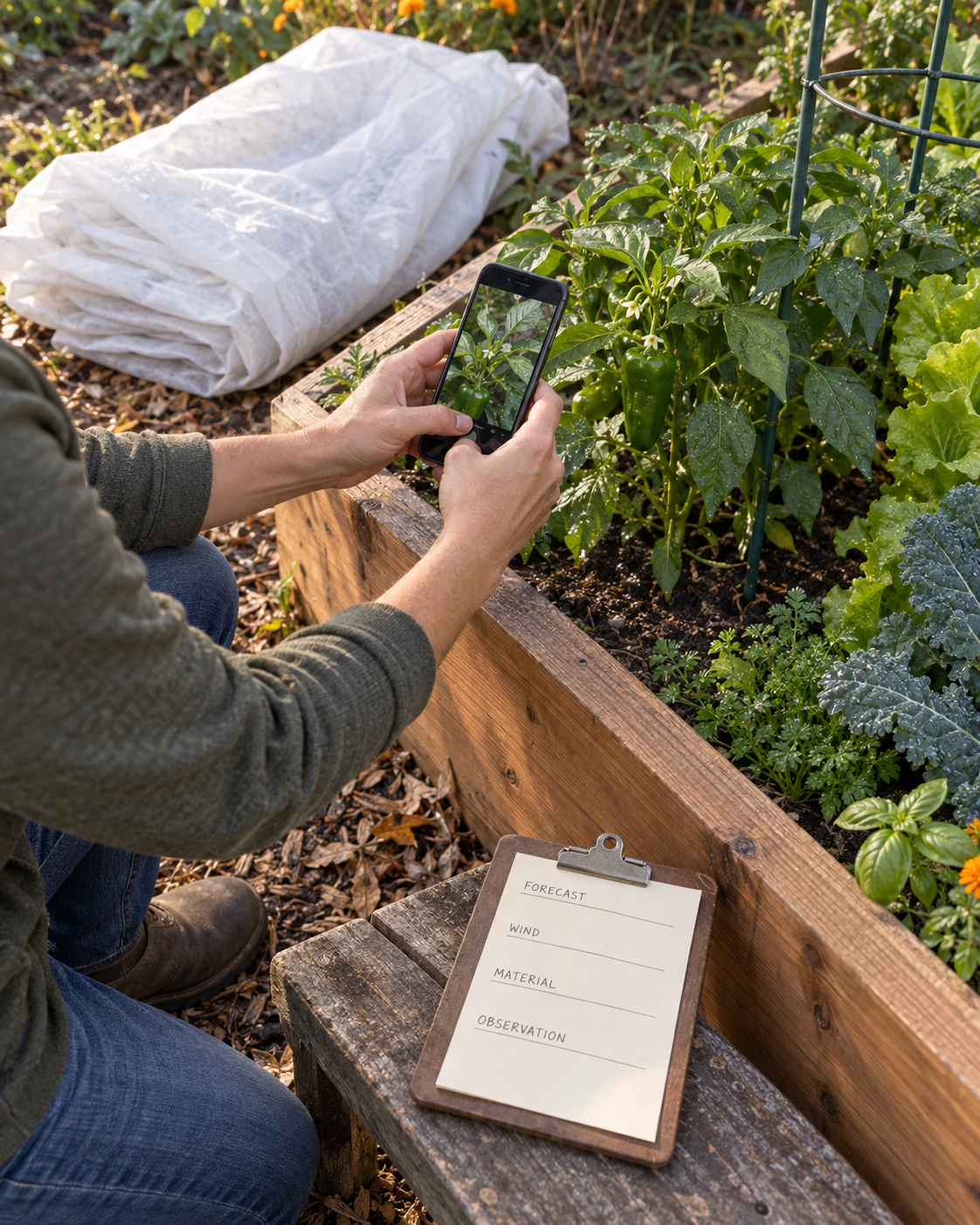
Illustrative image; not proof of frost, survival, damage, or recovery.
As colder weather becomes sustained, the decision changes from one-night protection to winter harvest, season extension, or closing the crop. A fabric that worked for one mild event may not be the right system for repeated freezes, snow load, or an unattended plastic tunnel.
Use the existing First-Frost Crop Plan to name each crop's action, the harvest being protected, the current forecast, and the morning-after check before you buy or install a cover.
Sources Reviewed
University of Maryland Extension — Vegetable Garden Weather and Pest Protection
Utah State University Extension — Five Ways to Protect Plants from Dipping Temperatures
Oregon State University Extension — Growing Vegetables in Central Oregon
University of Minnesota Extension — Protect Strawberries from Spring Freeze and Frost
Johnny's Selected Seeds — Agribon+ AG-19 product specifications
Johnny's Selected Seeds — Agribon+ AG-30 product specifications
Johnny's Selected Seeds — The Benefits of Row Covers educational page/video
Bootstrap Farmer — 6-mil Low Tunnel Greenhouse Film specifications